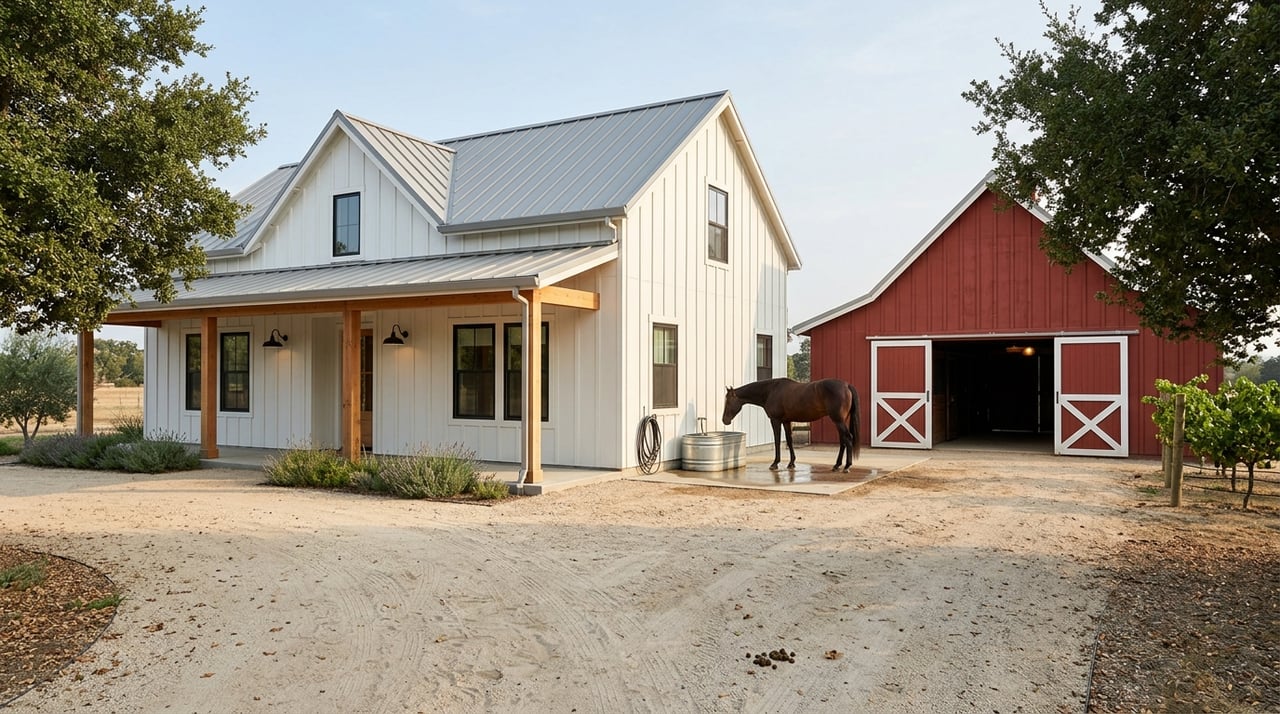
Wondering if horse property in Templeton feels rustic, convenient, or somewhere in between? The short answer is both. If you are dreaming about a place where morning barn chores can happen before a quick run into town, Templeton offers a lifestyle that blends real rural space with everyday practicality. Here is what country living with horses in Templeton often looks like, and what you should pay attention to as you search.
Templeton is an unincorporated North County community with a rural village identity centered around Main Street. Local planning documents describe it as small, tranquil, and open in feel, with more residential and commercial density as you move outward from downtown.
That layout matters when you picture daily life with horses. You are not looking at a fully isolated setting far from services. Instead, you get a community where open land, homes on acreage, and a recognizable town center all exist within the same local rhythm.
Highway 101 splits Templeton into east and west segments, with the Salinas River along the east side and the coastal range to the west. That geography helps shape the area’s country character and gives the community a defined sense of place.
In San Luis Obispo County, animal raising and keeping is clearly part of the county’s agricultural framework. The county defines it broadly enough to include commercial ventures, hobbies, avocations, and school projects, whether that use is the main use of the land or secondary to a home.
That is important if you are considering a horse property in Templeton. Horses are not treated like an unusual exception here. They fit into a county setting where agriculture, rural land use, and equestrian activity are already part of the vocabulary.
The county also identifies specialized animal facilities such as riding academies, equestrian exhibition facilities, and large-scale horse ranches. Even if you are simply looking for a private home with turnout and a barn, this broader context supports the idea that horse ownership is a familiar part of the area.
Country living with horses in Templeton is often more about private property function than public trail access. Templeton planning documents discussed equestrian trails along Toad Creek, but also noted that a continuous equestrian trail corridor would be difficult because the creek corridor is divided by small parcels.
In practical terms, that means many buyers are drawn to Templeton for what they can do on their own land. Think paddocks, barns, fencing, turnout areas, trailer access, and enough room to create a working routine that fits your horses.
This is one reason parcel layout matters so much. Two properties may both be described as horse properties, but they can offer very different levels of usability depending on acreage, access, improvements, and county standards.
Templeton’s nearby climate profile points to hot, dry summers and mild winters. A climate summary for nearby Paso Robles Municipal Airport reports an average August high of 95°F, an average January high of 60.8°F, and annual precipitation of 12.16 inches.
If you own horses, those conditions influence how you plan your day. Summer routines often favor earlier starts, shade considerations, and steady water planning, while the generally mild winters support an outdoor-oriented lifestyle for much of the year.
The weather also affects property features that matter on acreage. Barn orientation, drainage, turnout conditions, and water access all become more than nice extras when you are thinking about horse comfort and everyday management.
One of Templeton’s biggest strengths is that country living does not have to feel disconnected from town. Main Street is compact and active enough to support day-to-day errands without turning every stop into a long drive.
Local chamber listings show a cluster of restaurants on South Main Street, along with Templeton Market & Deli and other familiar stops near the downtown core. Travel listings also point to historic Main Street as a walkable area for dining, tasting rooms, and shops.
That pattern helps define the Templeton lifestyle. You can picture a day that starts with feeding, turnout, or stall cleaning, then shifts into town for groceries, lunch, or a quick errand before heading back home.
Templeton also benefits from a defined local service structure. The Templeton Community Services District provides water, sewer, fire, parks and recreation, refuse, lighting, and drainage services.
For buyers coming from more urban neighborhoods, this can be a helpful middle ground. A property may feel rural and spacious, but it is still connected to local systems rather than operating as if it were completely off-grid.
There is also visible equestrian and animal-care support in the area. Templeton Chamber listings include Gold Medal Equestrian on Concho Way and Las Tablas Animal Hospital in Templeton, which points to a local network that can support horse owners in day-to-day life.
Templeton’s wider setting adds another layer to the appeal. Wineries and tasting rooms appear both in town and on surrounding roads, including locations on Main Street, Jack Creek Road, Vineyard Drive, and in the El Pomar area.
That mix matters because it reflects the character of the area itself. Barns, vineyards, tasting rooms, and homes on acreage can all exist within the same lifestyle map, which is part of what makes Templeton appealing to buyers who want space without feeling cut off.
This is also a place where agriculture is part of everyday life. County planning materials note that protected agricultural operations can involve ordinary farm-related sights, sounds, and odors, which is simply part of the setting for many rural properties in the area.
If you are searching for horse property in Templeton, due diligence is essential. San Luis Obispo County makes it clear that buyers should confirm whether a parcel is inland or coastal, review the county land use category, check allowable uses and specific standards, and look at planning-area standards and combining designations.
The county also notes that some projects may need land-use permits before a building permit. Depending on the property and the project, that can involve approvals such as Zoning Clearance, Plot Plan, Site Plan, Minor Use Permit, Conditional Use Permit, or a Variance.
This is why the phrase “horse property” should never be taken at face value. A parcel may have the look and feel of an equestrian property, but your intended use still needs to line up with zoning, permit requirements, and site-specific conditions.
The county’s code-enforcement FAQ includes a partial animal-keeping table that shows horses are allowed in some residential categories at densities ranging from 1 horse per acre up to 4 horses per acre on larger lots. Because the table is partial and zoning-dependent, it works best as a starting reference rather than a blanket rule.
For you as a buyer, that means asking more specific questions early. The real issue is not whether Templeton is horse-friendly in general. It is whether the exact parcel you like supports the number of horses, structures, and uses you have in mind.
When you walk a property, it helps to think beyond the house. In Templeton, the value of a horse property often depends just as much on how the land works as on how the home shows.
Look closely at practical features such as:
These details are part of normal rural property life in Templeton. They also help explain why one acreage listing may feel ready to use while another may need meaningful adjustments.
Templeton tends to attract buyers who want three things at once. They want a true country setting, they want horses to fit naturally into the local environment, and they want town amenities close enough to keep life manageable.
That combination is not always easy to find. In Templeton, you can get a rural-acreage feel, a county culture where horses and agriculture already belong, and a Main Street that keeps errands and small-town connection within reach.
For many buyers, that is the real draw. The lifestyle feels romantic, but it also works in everyday life.
If you want help evaluating barns, turnout, fencing, access, and the real-world usability of a Templeton horse property, Hertha Wolff- Arend offers practical guidance shaped by local market knowledge and lived equestrian experience.