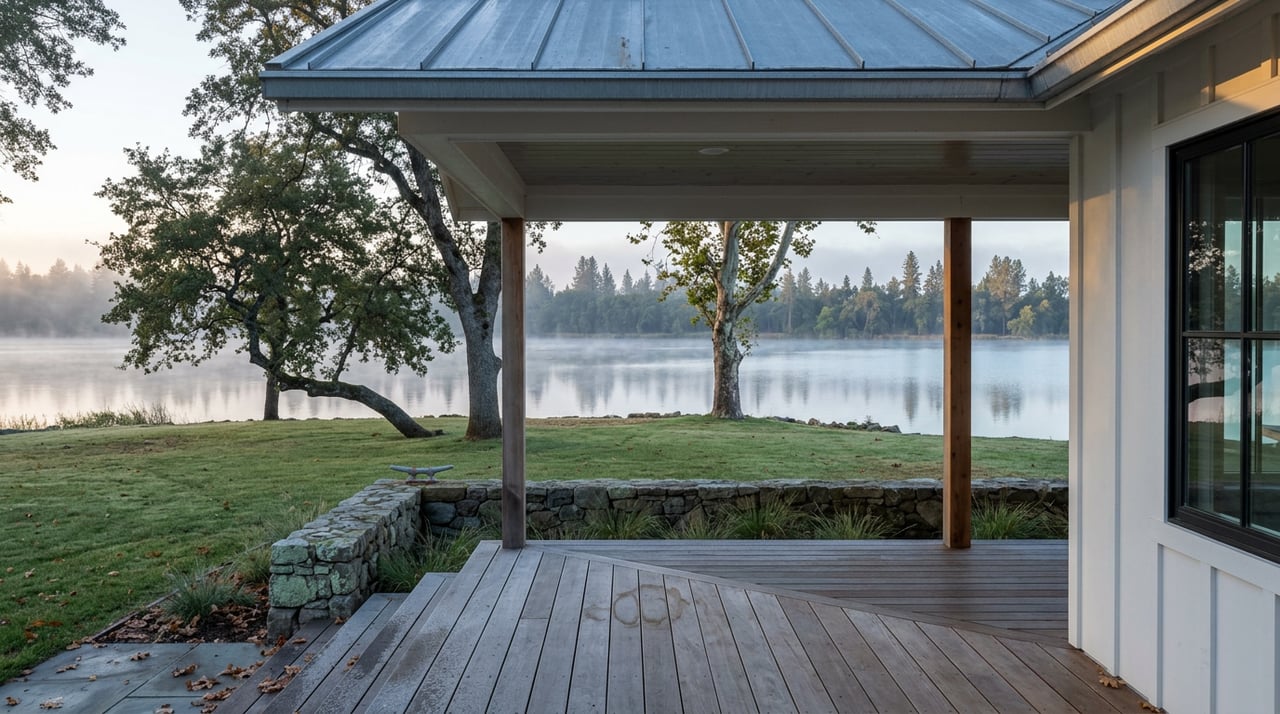
Stand on the bank near the dam some evening in the next few weeks and you might see the water do something that looks almost violent. A patch of surface fifty feet out goes white and frantic, shad throwing themselves clear of the water, gulls dropping in from nowhere, and then it's gone as fast as it started. That's not a fluke or a fish jumping for a bug. That's the signal residents actually watch for, and it has nothing to do with the Resort's printed calendar or the last day the pool is open.
Most of what gets written about Lake Nacimiento's seasons treats the whole year as one long recreation window that dims after Labor Day. That's the visitor's version. The version that matters if you live here is narrower and stranger: the lake runs two completely different fish shows, in two different parts of the water, months apart, and the one starting now is the one almost nobody outside the marina crowd knows to look for.
Walk into the general store and there's a small board listing the lake's standing catch records. The largemouth bass mark sits at 9 pounds, 14 ounces. Channel catfish tops out at 20 pounds, 2 ounces. The carp record, 52 pounds, has stood since 1968 and is a California state record, caught by an angler named Lee Bryant. Most visitors walk past it on the way to rent a pontoon boat.
The white bass line on that board tells a better story than its weight does. Nacimiento is the only lake in California stocked with white bass, which locals mention so often it's practically a civic fact. What gets left out is who held the fly-fishing record for it. In 1981, Cory Wells, the lead singer of Three Dog Night, landed a white bass here that set the fly-rod record, and that record stood for more than 27 years before anyone broke it. That's a rock star's name attached to a fish record at a Central Coast reservoir, and it's the kind of trivia that only survives in a place where people actually fish the same water their parents did.
There's a regulatory quirk tied to the fish that's worth knowing if you're new to the lake or new to fishing it. There's no daily limit on white bass here, but the rule is unusual: any white bass you catch has to go back in the water immediately or be killed on the spot by removing the head or cutting through the gills. No keeping it on a stringer to decide later. It's the kind of detail that only shows up if you've actually stood at the cleaning station and asked why the guy next to you is following a rule you've never heard at any other lake.
Here's the part that gets flattened in most write-ups of the lake: the spring run and the current one aren't the same event wearing a different date.
In spring, white bass push up into the river inlet to spawn, and the action concentrates in one specific stretch, the narrow canyon section locals call the Narrows, along with the main channel between the marina and Bee Rock, and up into Las Tablas Creek and Town Creek. Getting to the river requires close to an hour by boat from the public marina, and during a strong spring the lower stretch of river fills with fish so thick you can't see the bottom. That run is about reproduction. The fish are headed somewhere, and the fishing is almost incidental to the spectacle of watching thousands of them stack up in clear water.
What starts now, from late August through October, is a different animal entirely. This isn't a spawning migration. It's white bass and spotted bass schooling up together and chasing bait along the deeper edges closer to the dam, pushing shad to the surface in tight, explosive boils that can be spotted from a boat or from the cliffs above the water. The two species get so mixed up in the feeding frenzy that you genuinely don't know which one you've hooked until it's in the net. It's faster, louder, and far more visual than the spring run, and it happens in completely different water. If you've only ever fished or watched the spring spawn, the fall boils are a different show you haven't seen yet.
Worth remembering while you're out there: Nacimiento's fish carry a mercury advisory, which is part of why catch-and-release is the practical default for most species here. Watching a boil from the bank costs nothing and doesn't require a license.
The Resort and the county both draw the same line on the calendar, and it's the real hinge for how the lake feels day to day, not the last weekend of summer. Monterey County's own park listing splits its fee schedule into Summer Rates, running April through September, and Winter Rates that begin October 1 and run through the end of March. The Resort's own booking rules echo the same date: senior, military, and veteran discounts don't apply during the October 1 through April 30 off-season window or around special events, which tells you plainly which months the place expects to be quiet and which months it doesn't.
What that quiet actually buys residents:
None of that shows up on a resort event flyer, because none of it is an event. It's just what the lake feels like once the calendar does what the county's own rate schedule says it's going to do every year on the same date.
The version of Nacimiento that gets marketed is the July version: full ramps, wakeboard boats, the Dragon Lake Grill patio packed on a Saturday night. The version that residents actually plan their year around is quieter and starts right about now, when the shad start boiling near the dam and the lake starts emptying out a little more each week until the county's winter rates kick in on schedule. If you live here, that's the season worth paying attention to.
If you're weighing what a shift like this means for a shoreline property you already own, or wondering how a quieter fall season changes the way a lake home shows to a buyer, Hertha Wolff-Arend works with country and lake property owners around Paso Robles, Templeton, Atascadero, and Lake Nacimiento and understands how the lake's own calendar shapes that conversation. Request a personalized country-home consultation and valuation whenever the timing feels right.