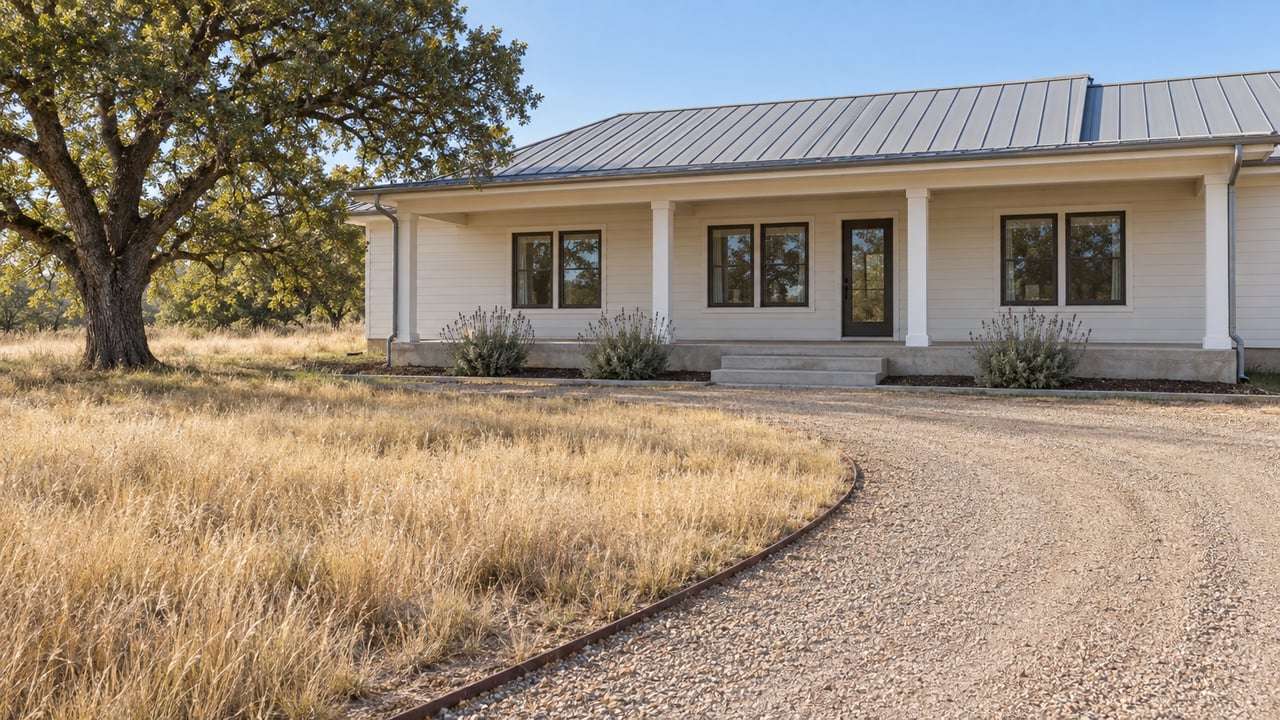
This fall, property tax bills in the Paso Robles Subbasin include a new special assessment labeled "PASO ROBLES AGA." The charge is $22.90 per acre-foot of groundwater consumed during Water Year 2025, which ran from October 1, 2024 through September 30, 2025. The Paso Robles Area Groundwater Authority adopted it unanimously on May 27, 2026, as a one-year fee to fund its FY 2026–27 budget of $1,095,446. Anyone who bought country property in the basin since October 2024 may now be paying for water the previous owner used.
For most small parcels the amount is modest. What matters more for buyers is the system behind it. Every parcel in the basin now has a published estimate of its past water use. That estimate comes from satellite data, and it stays with the land through a sale.
PRAGA expected this question and answered it in its fee FAQ:
"The fee is tied to the impact of the parcel on the groundwater basin. The consumptive use calculation was established using data from the land itself."
That was its answer to the question "why should a new owner pay for water they didn't pump?" For leased land, the FAQ says the charge goes on the property tax roll and "owners and tenants must make arrangements between themselves for responsibility for payment." The PRAGA and County materials we reviewed contain no rule for splitting the charge between a buyer and a seller. Under the adopted resolution, PRAGA had to deliver its parcel list to the County by August 1, 2026. Collection runs through the regular property tax roll, and the County mails bills in fall 2026.
Local farmers raised the same problem before the vote. Jon Cagliero of Cagliero Ranches, which grows grapes, hay and pistachios and runs cattle between San Miguel and Paso Robles, told the board that a landlord whose tenant leaves "will be stuck with a fee for water they didn't consume." A buyer is in the same position as that landlord. The use happened under someone else, and the bill arrives at the new address.
How the charge is split in a particular sale is a question for your escrow officer and your own advisors. The fee itself is public and was set months ago.
The fee is based on consumption, meaning water that is pumped and not returned to the basin. A rural household's indoor water mostly goes through the septic system and back into the ground, so domestic well owners are not billed directly. The resolution exempts de minimis extractors, defined as those using up to 2 acre-feet per year for domestic purposes, and the participating Groundwater Sustainability Agencies pay their share. The exemption depends on how the water is used. Parcel size doesn't factor in.
To estimate everything else, PRAGA's consultant Land IQ mapped every field in the basin. It then calibrated satellite thermal readings against weather stations and estimated each field's evapotranspiration by crop type. According to the FAQ, the estimates are checked against five research-grade weather stations in the basin. In the published parcel schedule, agricultural use, pond evaporation and commercial use appear as separate parts of a parcel's total.
This is where horse properties come in. A house with a few acres of irrigated pasture, a stock pond or a green paddock looks like a field to a thermal sensor. The published schedule and fee FAQ we reviewed do not say how a parcel that combines a home, pasture, landscaping and a pond gets classified. The schedule does show small parcels being charged:
| Parcel in PRAGA's published examples | Estimated WY2025 consumed use | FY 2026–27 fee |
|---|---|---|
| 2.92 acres | 1.06 acre-feet | $24.25 |
| 3.44 acres, Estrella-El Pomar-Creston area | 1.63 acre-feet | $37.28 |
| 316.42 acres, including 6.02 AF pond evaporation | 121.34 acre-feet | $2,778.75 |
| 523.13 acres, Shandon-San Juan area, including 7.55 AF pond evaporation | 316.85 acre-feet | $7,428.74 |
The two small parcels owe less than a tank of hay-truck diesel. The larger rows show that ponds have their own line in the formula, and that the charge grows with irrigated acreage and open water. Both of those are features buyers look for in equestrian and country property.
The satellite estimate is a model, and the appeals show it can miss. PRAGA received 30 appeals. Eighteen challenged Land IQ's estimate or whether land was irrigated at all in WY2025. Eight said the water came from a source outside the basin. Four objected to the fee on non-technical grounds. Across all 30, recommended charges fell from $62,462.74 to $49,469.61. One 3.20-acre grape parcel billed $46.59 dropped to zero after satellite imagery confirmed the vineyard was abandoned. A 52.23-acre parcel with a proposed fee of $1,151.44 also dropped to zero after review showed it had gone fallow and then to dryland grain. The board ruled on the appeals at its June 24 and July 22 meetings.
Appeals closed June 8, 2026. Only a current owner who was paying attention in May could have contested a parcel's number. If the seller never looked, the estimate on this fall's bill stands as published. The appeals summary we reviewed doesn't show whether any appeal involved horse pasture, a residential pond or a home parcel classified as agricultural.
The Board has not proposed a fee for future years. It would be easy to treat this as a one-time charge, but the reason it exists hasn't gone away. The Department of Water Resources classifies the basin as critically overdrafted, and the authority must bring it into balance by 2040. Board member Hilary Graves said the alternative is the state setting its own pumping rules and fees. A five-year fee under Proposition 218 failed in 2025 when 738 of 1,281 eligible parcels filed protests. The one-year fee is what the authority passed in its place. Its budget also sets aside $7,000 to work with the County on a well verification and registration program.
The basin's own numbers are mixed. The Water Year 2025 annual report, dated March 26, 2026, estimates that groundwater storage rose 27,300 acre-feet after falling 25,500 acre-feet in WY2024. It puts total extraction at 61,400 acre-feet, close to the estimated sustainable yield of 61,100. The same report says most of the drop from WY2024's 75,100 acre-feet comes from switching to Land IQ data, which lowered the agricultural estimate by almost 15,000 acre-feet. The report states that this drop reflects the new method, not lower demand. Among the representative Paso Robles Formation wells, three were below the plan's minimum threshold.
For one buyer looking at one parcel, the basin average doesn't say much. The well on that land does. In April 2025 the Tribune counted 337 dry-well reports across the basin since summer 2014. It described a 5-acre property east of Templeton where all three 250-foot wells had gone dry and the owners were paying $350 a month to truck in water. In December 2025, KCBX reported testimony about failed wells in Squirrel Hollow, with redrilling costs put at about $50,000 to $80,000. Next to those costs, a $37 assessment is small. But the published consumption figure is the only parcel-level record of how much irrigated land the previous owner was running.
Does a home on a domestic well pay this fee? Not directly. Domestic use up to 2 acre-feet per year is treated as de minimis, and the member GSAs pay that share. Irrigated acreage or a pond on the same parcel may still show up as chargeable use.
Is the City of Paso Robles passing this on to residents? Mayor John Hamon said the city's 2022 water rates already account for possible groundwater fees, so city ratepayers won't see a separate increase. Pumpers inside the city, such as golf courses, do pay.
If the land is fallowed this year, does the charge go away? This year's bill is fixed at WY2025 use. PRAGA says that if a similar fee comes back next year and the parcel had no use, there would be no charge for that period.
If you are weighing an acreage or horse property in the basin and want help checking its pasture, ponds and wells against PRAGA's parcel record before you write an offer, Hertha Wolff-Arend can go through that information with you. Request a personalized country-home consultation and valuation.