Wondering whether a Templeton property will truly work for your horses, or just look good in photos? That question matters more than many buyers expect. In Templeton, the right horse property is not just about acreage. It is about usable land, water, access, zoning, and how the parcel fits the area’s rural-agricultural setting. If you know what to check before you make an offer, you can avoid expensive surprises and focus on properties that support both your horses and your long-term plans. Let’s dive in.
Templeton is shaped by a mix of agricultural land, rural residential areas, and rural estate homesites. County planning materials also note that the area has a limited water supply. For horse buyers, that means the basics matter: usable ground, reliable water, drainage, and practical infrastructure.
It also helps to understand the broader setting. In unincorporated San Luis Obispo County, agricultural activity is encouraged and protected, and grazing is generally allowed outside urban and village reserve areas. In many cases, grazing livestock does not require a land-use permit unless the project also involves things like grading, native vegetation removal, or new buildings.
That is why buying in Templeton is different from buying a standard residential property. You are evaluating how a parcel functions within a working rural landscape, not just how attractive it feels on a weekend tour.
A five-acre parcel can work beautifully for horses, or it can be frustrating and costly. The difference often comes down to usable shape, slope, drainage, and layout.
When you tour a property, look beyond the total acreage number. Ask yourself whether the land gives you enough practical space for turnout, pasture rotation, trailer movement, hay delivery, and everyday barn routines.
Usable horse acreage is land you can safely and efficiently live on with horses. A property may have enough acres on paper but still lose value for horse use if steep slopes, awkward shapes, wet areas, or access bottlenecks limit how you can use it.
Look for:
If you are already imagining where an arena or additional paddocks would go, pause and confirm the site conditions first. Creek edges, swales, and uneven ground can affect whether future improvements are realistic.
Many horse buyers fall in love with a parcel because they see its future potential. In Templeton, that potential needs to be checked against county grading rules before you assume a simple improvement will stay simple.
San Luis Obispo County generally requires a grading permit when a project removes or deposits more than 50 cubic yards of soil, when fill exceeds 3 feet, or when cut exceeds 2 feet. The county also says no grading or grubbing should occur within 50 feet of a creek or stream.
If you want to flatten an arena pad, improve a turnout area, reshape drainage, or cut in better trailer access, the work may trigger county review. If the parcel includes creek-adjacent pasture or a drainage swale, that review becomes even more important.
The county says an agricultural grading form and site plan must be approved before agricultural grading begins. In some situations, buyers may also need to verify whether the project qualifies for the agricultural grading process or an alternative review path through NRCS or an RCD.
This is one of the biggest reasons to evaluate the land with horse use in mind from the start. A property that already works well often creates fewer permit surprises later.
In Templeton, zoning matters just as much as acreage. You cannot safely assume that a parcel can support your horses, your barn plans, or a future boarding setup based on appearance alone.
The county’s zoning guide says buyers should use the Land Use View map by address or APN and check for any combining designations on the parcel. That is the first step in understanding what the site may allow.
The county’s animal-keeping guidance gives practical benchmarks for horse density:
These numbers make one point very clear: lot size alone does not tell the full story. The zoning category can change what is possible on the same amount of land.
If your intended use goes beyond personal horse keeping, take that seriously during due diligence. The county specifically flags horse ranches, horse boarding, and horseback riding lessons as uses that may fall under specialized animal-facility or agricultural-accessory-structure review.
That means a property that works for private use may not automatically work for a commercial equestrian use. If that is part of your plan, verify it before moving forward.
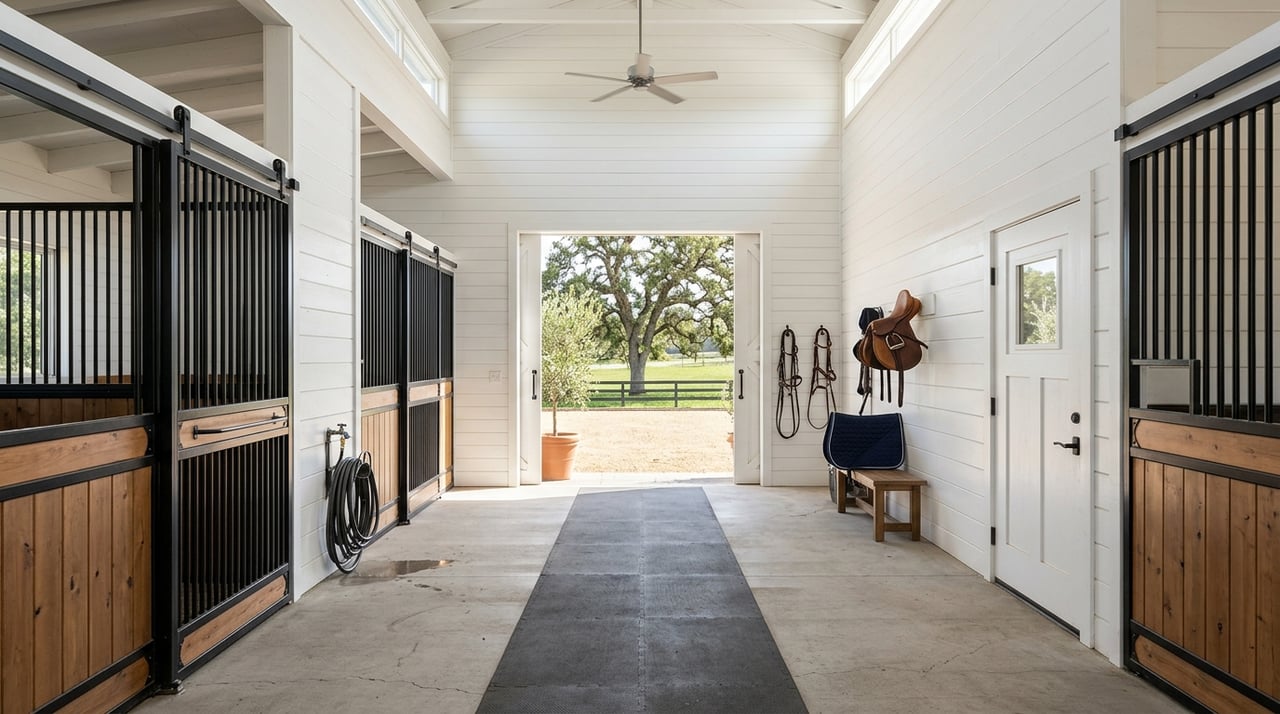
A barn is not just a structure. On a Templeton horse property, barn placement affects circulation, setbacks, access, utilities, and how the whole property functions day to day.
For agricultural building exemption review, the county requires a scaled site plan showing property boundaries, fronting streets, existing and proposed buildings and driveways, easements, distances to property lines and other structures, and the location of wells and septic systems. That makes support structures part of the larger planning picture.
Ask for permit history on:
Also remember that county approval of an exempt agricultural building covers the use itself, but separate construction or grading permits may still be required. In addition, structures over 120 square feet generally require a construction permit unless an exemption applies.
For buyers, the takeaway is simple. Existing horse infrastructure should be reviewed as carefully as the house itself.
Templeton’s planning materials note a limited water supply, and that should be front and center when you evaluate horse property. Horses, pasture, wash areas, and barn routines all depend on reliable water.
Before you assume a parcel can support your setup year-round, verify well, septic, and irrigation capacity. This is especially important if the current property presentation highlights pasture or green landscaping that may be seasonal or water-intensive.
Because the county’s agricultural building exemption process requires wells and septic systems to appear on the site plan, their placement also affects where future structures may fit. A good-looking barn location on first glance may be less practical once you factor in these systems.
Many buyers want a property that supports riding beyond the fence line. In Templeton, it is worth separating true equestrian access from general recreational access.
Templeton’s Community Design Plan recommends a 10-foot decomposed-granite shoulder on one side of rural roads where horse ownership is anticipated. It also says roadside equestrian trails should be used only where traffic is very light and slow, not along major transportation corridors or urban streets.
If riding access is important to you, look for signs that the area naturally supports horses, such as:
The county’s Parks and Recreation Element gives useful benchmarks for horse trails, including 12 feet of vertical clearance and at least 6 feet of shared width where horses and pedestrians share the corridor. Trailhead features like trailer parking, toilets, information boards, hitching posts, and tether lines can also help you judge whether a route truly serves equestrian use.
One more point matters here. The Templeton to Atascadero Connector is currently described as a Class I multi-use trail for bicyclists, pedestrians, and non-motorized vehicles, with design expected in 2027 and construction tentatively in 2028. Buyers should treat it as a planning factor, not assume it will provide horse access unless final easement and use rules specifically say so.
Templeton horse properties exist within a larger agricultural environment. That can be a real benefit if you want space, working land around you, and a setting that already supports rural use.
It also means you should expect the realities of an active ag area. Nearby vineyards, orchards, grazing activity, dust, noise, and rural operations may be part of daily life. For many horse owners, that is a normal and welcome part of the landscape. The important thing is to evaluate it with clear expectations.
If the parcel is near active agriculture, the county’s Agriculture/Weights and Measures office can help determine whether certain practices are allowed and can mediate some dust, noise, or odor concerns. That can be a helpful resource during your due diligence.
Before you move forward on any property, make sure you have answers to these core questions:
In Templeton, the best horse properties are often the ones that already match the county’s rural-ag use patterns. When a parcel has usable land, workable water, clear zoning, and fewer improvement hurdles, it tends to support a smoother ownership experience.
If you want a practical second set of eyes on turnout layout, barn positioning, access, and the property details that matter to horse owners, Hertha Wolff- Arend offers calm, knowledgeable guidance rooted in real equestrian experience and local country-property expertise.