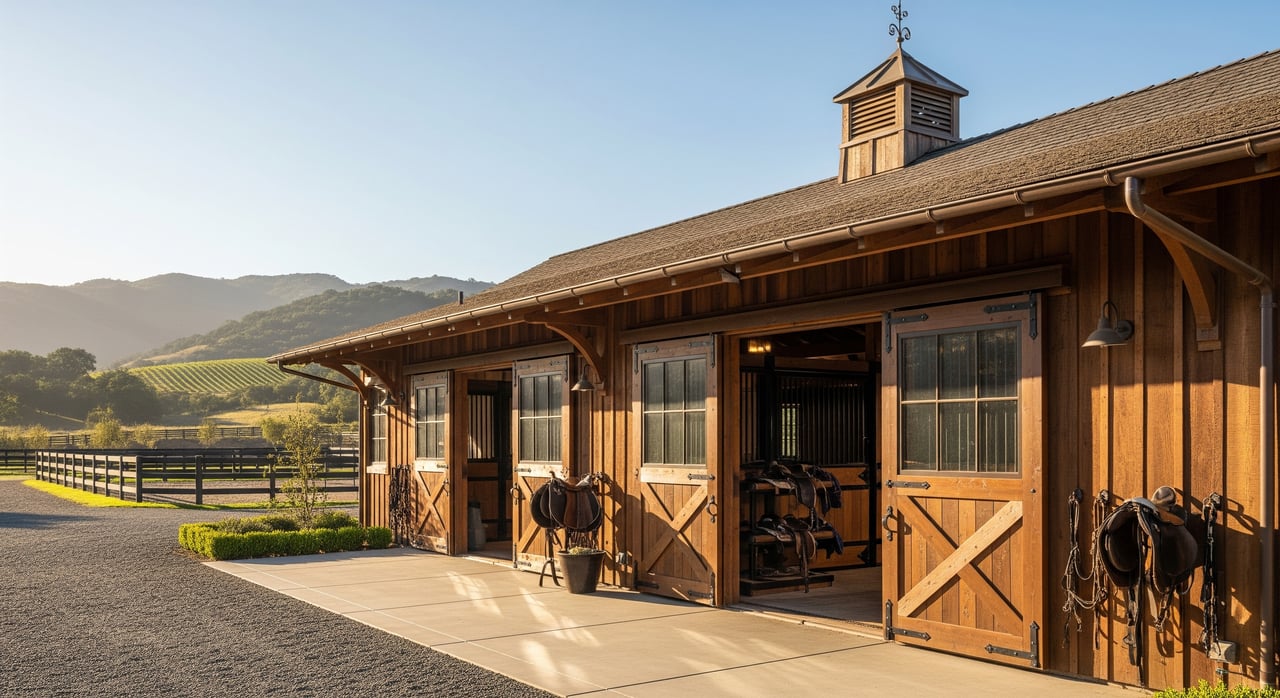
Shopping for or upgrading a horse property in Templeton can feel exciting and overwhelming at the same time. You want a barn that keeps horses comfortable, makes daily care efficient, and stands up to local conditions. This guide shows you the barn, turnout, and arena features that matter most in Templeton’s climate, plus practical checks to protect value. Let’s dive in.
Templeton has hot, dry summers and cool, wet winters. That means ventilation, shade, and dust control matter in summer, while drainage and mud management matter in winter. Afternoon breezes are common in nearby valleys, so plan arena orientation and wind breaks with local wind patterns in mind.
Microclimates vary across parcels. Exposed ridgelines and sheltered low spots can change temperature, wind, and moisture. Walk the site at different times of day to verify airflow, shading, and drainage.
Much of San Luis Obispo County pays close attention to wildfire risk and defensible space. Verify whether a parcel sits in a State Responsibility Area or in a high fire-hazard zone. Plan a 100-foot defensible space around barns and hay storage, and look for fire-resistant roofing and siding, screened vents, and accessible water supplies.
Keep hydrants, tanks, or draft-capable water sources close to the barn. Confirm that gates, driveways, and turnarounds allow emergency-vehicle access. Clear egress routes and well-marked gates help people and horses move quickly if needed.
For most adult horses, 12 ft x 12 ft stalls are the comfort and resale sweet spot. Smaller 10 ft x 12 ft stalls can work for light-use horses but reduce market appeal. Foaling or stallion stalls are best at 14 ft x 14 ft to 16 ft x 16 ft for safe movement.
Aisles should be at least 10–12 ft wide, with 12 ft preferred to accommodate tractors and safe two-way passage. Choose sliding or Dutch doors for safety and ventilation. Aim for a clear height of 10–12 ft in stalls and aisles to improve airflow and comfort.
A well-drained, compacted subbase topped with rubber mats supports hoof health and cleaning efficiency. Grade the site so water flows away from the barn, and install gutters that direct runoff to vegetated or engineered areas. Avoid wood floors unless they are correctly treated and drained.
Create natural airflow with ridge vents, cupolas, and eave or operable windows for cross ventilation. Intake openings low and outlets high help remove heat and moisture during Templeton’s hot summers. Use skylights or translucent panels carefully for daylight and add screening to reduce heat gain.
Supplement with mechanical fans during heat waves or in enclosed barns. Good daylight and clean air improve horse comfort and reduce lighting loads.
Use code-compliant electrical with GFCI-protected outlets in wash and feed areas. Separate circuits for tack room refrigeration, fans, and heaters reduce nuisance trips and improve safety. Protect wiring in conduit and place labeled panels in accessible locations.
Plan exterior lighting for safety at entries and arenas, and be mindful of neighbors and dark-sky preferences. Reliable lighting supports early starts and short winter days.
Hay is a fire risk. Store it separately from stalls when possible, or use a fire-resistant enclosure with strong ventilation and a nearby water source for firefighting. Avoid loft storage above stalls unless the structure meets fire-separation and local code requirements.
Design a dedicated feed room with sealed bins and sound rodent control. Easy inspection and clean storage protect horses and feed quality.
A locking, ventilated tack room protects saddles and gear. Wash racks should have non-slip surfaces, hot and cold water, GFCI outlets for clippers, and proper drainage. A designated grooming or vet area reduces odor and dust transfer and keeps workflow calm and organized.
Favor ember-resistant vents, non-combustible or fire-resistant siding, and Class A roofing where feasible. Place fire extinguishers and hydrants within easy reach. Keep aisleways and gates clear, labeled, and wide enough for horses and vehicles.
Multiple paddocks let you rotate turnout, rest ground, and separate horses by need. Practical Templeton setups often use smaller day paddocks and larger pastures where space allows. Rotation helps protect footing and reduce overgrazing.
Horse-safe choices include post-and-board, vinyl coated rail, high-tensile electric with good visibility, and welded wire with a secure top rail. Avoid barbed wire in horse areas. Typical fence height is 4.5–5 ft for most horses, with taller or reinforced systems for stallions or larger breeds.
Build robust corner bracing and ensure excellent visibility to reduce injury risk. Gates should swing freely and be 10–12 ft wide for equipment access.
Plan gates, driveways, and hardstands so feed trucks, trailers, and manure-hauling equipment can turn and park safely. A clear 12–14 ft passage helps avoid damage and stress. Good circulation cuts daily effort and improves safety.
Use a dedicated, hard-surfaced manure storage area away from wells and watercourses. Covered or well-drained piles reduce flies and runoff. Follow county and state guidance on setbacks and water protection.
Rotate turnout, overseed as needed, and plan supplemental feeding during dry summers or wet winters. Choose forage and ground covers suited to Mediterranean conditions. Stabilize slopes and maintain vegetated buffers near waterways to control erosion.
A north–south long axis helps reduce low sun glare in mornings and evenings. Balance this with local wind patterns to manage dust and comfort. Use hills, buildings, or vegetation to shelter from prevailing winds without creating unwanted shade in winter.
Start with a well-compacted base of crushed rock or washed aggregate and a stabilizing layer. Select a top dressing suited to your discipline, such as sand or sand with fibers or rubber. Plan drainage under and around the arena to maintain footing integrity.
Templeton’s dry summers require dust control. Consider irrigation systems or additives and confirm water availability for regular maintenance.
Covered arenas increase year-round use and protect footing but require careful permitting and higher investment. Prioritize height, ventilation, lighting, and fire-conscious roofing materials. All structures must meet local building codes.
Use shielded, well-aimed lighting for evening rides and to respect neighbors. Place warm-up or viewing areas so they do not conflict with stall or paddock traffic.
Check electrical capacity for pumps, fans, heaters, tack room refrigeration, and arena lighting. Identify whether water is from a private well, municipal connection, or hauled water. Verify pump capacity and storage volume for daily needs and potential firefighting.
Bury water lines below the surface to protect them from damage and occasional cold snaps. Label shutoff valves and protect exposed fixtures from horses and equipment.
Any barn plumbing, including wash racks, can affect septic sizing and location. Verify septic capacity and last inspection. Keep wash and stall runoff out of waterways and use vegetated swales or settling areas as needed.
Two egress routes help evacuation during wildfire events. Confirm gate width, vertical clearance, and turning space for fire engines. Document water sources and keep hydrants visible and clear.
Insurers pay attention to hay storage, defensible space, and water for firefighting. Document your fire-prevention measures and maintenance routines. Good records can support coverage and peace of mind.
Use this quick list when touring or inspecting a property:
If you plan to sell, strategic upgrades can boost buyer confidence and shorten time on market. With Compass Concierge, select improvements can be completed and paid at closing, subject to program terms. For timing gaps between selling and buying, bridge-loan solutions can reduce stress.
A well-planned barn in Templeton balances airflow, shade, drainage, and fire safety with daily efficiency. When stalls, arenas, utilities, and turnout all work together, you protect horse health and long-term property value. If you want a second set of eyes on features that matter to buyers in San Luis Obispo County, let’s talk.
Ready to evaluate your current setup or shop with a strategy? Connect with Hertha Wolff-Arend for a practical, equestrian-informed plan tailored to Templeton.