You can love a five-acre listing and still end up with a poor horse setup. In Paso Robles, the real question is not just how many acres a property has, but how that land actually works for horses, trailers, water, and daily barn life. If you are shopping for horse property here, a smart first screen can save you time, money, and frustration. Let’s dive in.
Paso Robles includes rolling hills, river bottoms, flatlands, mountains, and steeper hillsides and canyons, especially west of the Salinas River. That means two parcels with the same acreage can offer very different usable pasture, drainage, and trailer access.
For horse owners, usable land matters more than headline land size. A parcel may look generous on paper but lose function quickly if steep slopes, awkward shapes, or low-lying areas limit where you can place paddocks, cross-fencing, or a future arena.
If a property is outside Paso Robles city limits, San Luis Obispo County rules generally come first. If the property is inside an incorporated city, including Paso Robles, city rules apply.
That distinction matters because horse allowances are not the same across all land-use categories. County information shows that horse keeping can vary by residential land-use category, and more intensive equestrian uses, such as horse ranches, boarding, or riding lessons, may be treated differently from simply keeping your own horses.
One concrete county threshold is especially helpful during early screening. More than 30 horses on one site is treated as horse-ranch use under county code, which shows why zoning matters as much as acreage.
Before you fall in love with views or a barn, spend time with the county’s public mapping tools. San Luis Obispo County provides assessor parcel maps, Land Use View resources, and an Interactive Data Viewer that can be searched by address, parcel number, road name, or coordinates.
These tools are reference-only and should be independently verified, but they are still one of the best ways to screen a parcel before a showing. For horse buyers, they can reveal basic layout issues that listing photos often miss.
Aerial views and contour review are especially useful in Paso Robles because the area ranges from rolling plains to hills and canyons. If you want turnout areas, cross-fencing, or a future arena pad, topography can make or break the plan.
Many buyers focus on the house first and the driveway second. For horse owners, that order should often be reversed.
County standards note that driveways entering public roads must meet sight-distance requirements. Rural driveways use county standard drawings, and work in the county right-of-way usually requires an encroachment permit.
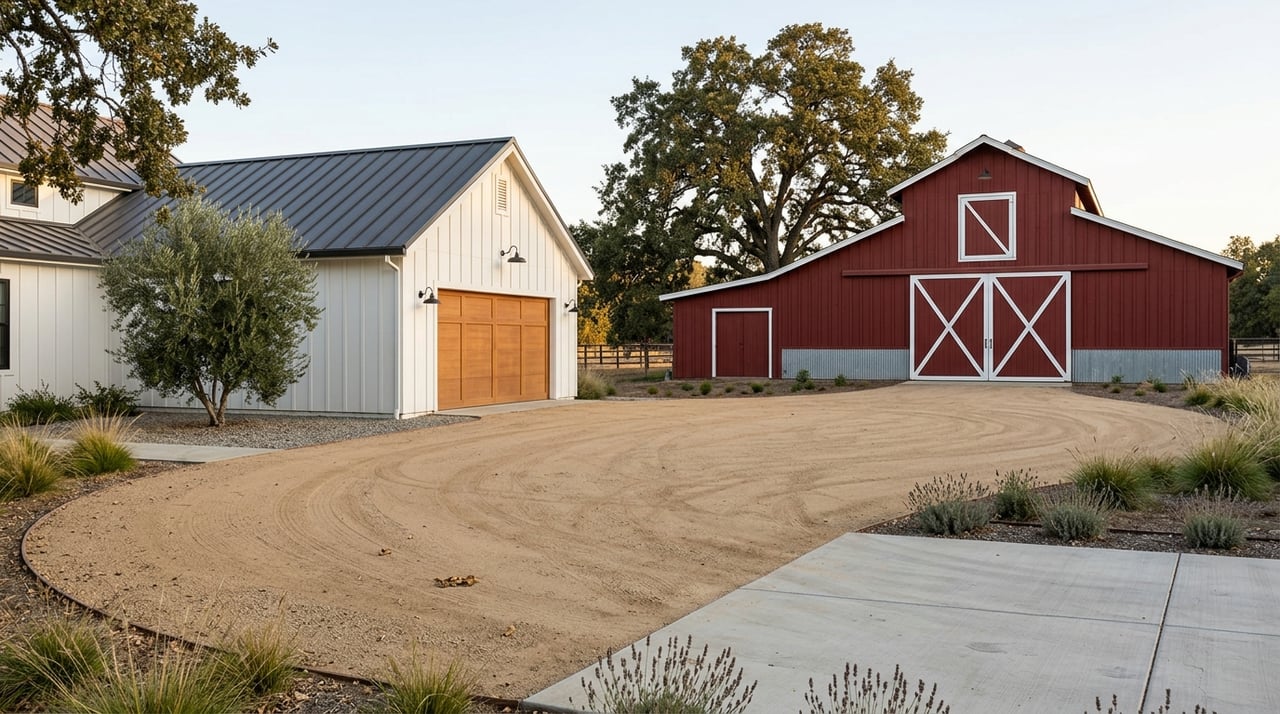
In practical terms, you want to know whether a horse trailer can enter, turn, and exit safely without backing into a public road. Turn radius, gate placement, and road alignment can affect daily convenience just as much as the number of stalls.
County public works resources on maps, road delays, and road closures can help flag access concerns early. That can be especially important for rural properties where winter conditions or route limitations may change how practical a parcel feels.
On rural horse property, water is not a background issue. It is central to daily operations, long-term cost, and future plans.
San Luis Obispo County identifies the Paso Robles Groundwater Basin as a high-priority basin under state groundwater planning. The county also provides groundwater basin maps and a well program with tools to search water-well construction permit data.
For buyers, this means well history and likely water availability belong near the top of your due-diligence list. If you are thinking about more horses, irrigation, wash racks, or expanded barn use, the water conversation should happen before you get deep into plans.
Horse buyers often think about barns, sheds, tack rooms, and guest space as natural upgrades. On rural property, septic capacity can shape what is realistic.
County onsite wastewater guidance sets minimum standards for septic systems and encourages maintenance and capacity verification for building expansions. That becomes important if you hope to add living space, convert an area, or expand how buildings are used.
Even if the current house works for you today, future flexibility matters. A property with limited septic capacity may affect plans for a barn apartment, guest area, or other improvements tied to your long-term lifestyle.
Low-lying land can look beautiful in the dry season, but horse owners should look closely at drainage and flood exposure. This is especially true near river and creek corridors.
The county reports FEMA flood-zone remapping along the Salinas River from the northern boundary of Paso Robles through San Miguel, as well as around Huer Huero Creek near Creston. Those changes can affect insurance and development.
Beyond formal flood zones, drainage patterns also affect daily horse keeping. Mud, runoff, and water flow can change where turnouts, hay storage, and barns function best.
A parcel can feel private and scenic while still carrying important wildfire considerations. That is why wildfire screening should happen early, not after you have mentally placed the barn and paddocks.
The county fire department points residents to the 2025 Fire Hazard Severity Zone map, and county guidance describes defensible space as a 100-foot buffer around structures. For horse properties, that has direct implications for barn siting, hay storage, brush clearance, and emergency access.
This is one more reason why layout matters more than raw acreage. You need enough practical room to create safer spacing between structures, vegetation, and horse-use areas.
It is easy to assume a tack shed or utility outbuilding is too minor to matter. In many cases, county permit rules still apply.
County guidance says most structures over 120 square feet require a construction permit. If you are evaluating a parcel with plans for sheds, tack space, or other small outbuildings, it is wise to factor permit review into your timeline and budget.
This can also affect how you compare properties. A parcel that already has functional, well-placed improvements may offer more immediate value than one that needs multiple new structures to serve your horses properly.
When you compare horse properties, drive time to equestrian facilities can be a practical lifestyle filter. This is useful whether you show, school regularly, or just want to stay connected to the local horse community.
Paso Robles Horse Park describes itself as a 70-acre facility with eight sand arenas, 480 onsite stalls, RV sites, and event space at 3801 Hughes Parkway. Twin Rivers Ranch describes itself as a 500-acre eventing facility in the heart of Paso Robles wine country, and the Paso Robles Event Center lists the Hearst Equestrian Center and horse-show programming at 2198 Riverside Ave.
These are not just amenities on a map. They can help you judge whether a property’s location supports the kind of horse life you actually want to live.
When you tour acreage, bring your horse-owner lens with you. The best parcel is the one that works in daily practice, not just in photos.
Buying acreage for horses in Paso Robles is part real estate search and part operational planning. The right property should support your horses, your equipment, your movement patterns, and your long-term goals.
That is why buyers often benefit from working with someone who understands both rural property and horse use on the ground. Details like turnout flow, fencing logic, barn placement, and trailer movement can change how a parcel feels once real life begins.
If you want help evaluating Paso Robles acreage through a practical horse-owner lens, connect with Hertha Wolff- Arend for a personalized country-home consultation and valuation.